Monday, October 27, 2025

1st Grade Our Trees of Peace, Inspired by Wangari's Trees of Peace

 Our Trees of Peace – Inspired by Wangari’s Trees of Peace 


This week, our first graders created beautiful mixed-media artworks inspired by Wangari’s Trees of Peace, the inspiring story of Wangari Maathai — an environmental hero from Kenya who planted trees to bring back peace, beauty, and life to her country.

Students began by drawing a horizon line with oil pastels, dividing their paper into sky and ground. Then, using soft watercolors, they gently painted the sky and land, learning how colors can blend and flow together.

Next, our young artists explored symmetry by folding and cutting out trees in many unique shapes. They practiced overlapping to show which trees were closer or farther away, discovering how foregroundmiddle ground, and background help create depth in a picture.

As they worked, we talked about Wangari’s message — that even one person can make a big difference by caring for the Earth. Our classroom filled with conversations about kindness, peace, and the power of planting trees.

Each student’s artwork became a personal “forest of peace,” reminding us all that small actions, like planting or creating, can grow into something beautiful.


Kindergarten Art: Houses in the Sunset

Kindergarten Art: Houses in the Sunset


Exploring Shape, Color, and the Concept of Home

In this week’s kindergarten art activity, we combined watercolor and collage to create “Houses in the Sunset.” It’s a simple yet powerful project that helps our students explore shape recognitionspatial awareness, and creative expression—all while thinking about the idea of home.

Students began by painting a beautiful watercolor sunset—warm washes of orange, pink, purple and gold blending together. Once dry, they used cut paper shapes to build their own houses on top: squares for walls, triangles for roofs, and rectangles for doors and windows.

Wednesday, October 22, 2025

Observational Drawings in 4th and 5th Grade: Seeing Like an Artist

Art in Action: Observational Drawing Projects in 4th & 5th Grade


Observational Drawing

Our 4th and 5th grade students are diving deep into observational drawingan essential artistic skill that goes far beyond the classroom. These projects are not just about making art, but about seeing the world with greater attention and awareness.

4th Grade Project: Faces – Drawing What We See

Our 4th graders are exploring a creative and slightly unconventional technique to understand facial proportions—drawing directly onto mirrors! In this project, students are using one eye to carefully observe and trace the lines and shapes of their own facial features. This method, known as contour line drawing, teaches them to look closely and draw what they actually see—not just what they think a face looks like.

Why it matters:
This practice sharpens their visual perception and improves hand-eye coordination. These are not only valuable artistic skills but also support focus and attention to detail—skills that are helpful in reading, science, and even sports!

Saturday, October 18, 2025

3rd Grade Art Project Paper Sculptures & Architectural Thinking!


Project: Paper Sculptures Inspired by Charles McGee

Guiding Question: How do paper sculptures help us think like architects?


What’s Happening in the Art Room?

Your child is designing 3D paper sculptures Inspired by Charles McGee— not just cool-looking art, but hands-on architecture-in-training!

They’re learning to:

  •  Build "form in space" — no flat shapes here! These sculptures loop, twist, and pop up into the air.
  •  Create with physical presence — the sculptures take up real space, just like a building.
  • Problem-solve like an architect — if it falls over, they fix it! They tweak angles, add support, and make it work.

This is creativity + critical thinking at its best.


Who Was Charles McGee?

Charles McGee was a celebrated American artist and sculptor who believed in mixing shapes, lines, and colors to create bold, 3D artwork that celebrates both nature and structure. His work is full of movement, rhythm, and imagination — just like your child’s paper sculpture!

Wednesday, October 15, 2025

2nd Grade - The Art of Admiration: My Teacher Has Superpower…

My Teacher Has Superpower, 2nd Grade Art Project


The Big Idea 

We began by asking a simple but powerful question:

“What is a superpower?”
Is it flying? Super strength? Invisibility? For our students, the answers were all of the above — but also more. Through thoughtful conversations, students began recognizing that real superpowers often show up in the everyday strengths of the people around them: kindness, patience, creativity, courage.

To guide our thinking, we read inspiring children’s books like:

  • What’s My Superpower? by Aviaq Johnston

  • Even Superheroes Have Bad Days by Shelly Becker

These stories helped students explore the idea that everyone has strengths — even on hard days.


The Art of Admiration

From there, students began a heartwarming sentence:
“My teacher has superpower…”

Each student thought deeply about what makes their teacher special — and how that "superpower" shows up each day in the classroom. Was it helping others understand? Being calm and encouraging? Making learning fun?

Once their sentence was complete, they created paper superhero crafts of their teacher — complete with capes, smiles, and all the imaginative flair you'd expect from second graders.


Why It Matters 

This project wasn’t just about art. It was about:

  • Noticing goodness in others

  • Expressing admiration

  • Learning by example

By recognizing and celebrating the strengths of others, students are taking the first step in discovering their own unique abilities. They're also learning empathy, gratitude, and the value of an open heart — all while having a blast with scissors and glue.


From Our Classroom to Your Home

At home you can continue this conversation! Ask your child:

  • “What do you think my superpower is?”

  • “What’s a superpower you’d like to have?”

  • “Who’s someone you admire, and why?”

You might be surprised by the insightful (and adorable) answers.


Thursday, October 9, 2025

K- G5 Look Deeper, Think Deeper

Looking to Learn: How Visual Thinking Strategies Shape Young Artists and Thinkers

In our Lower School art room, students from Kindergarten through 5th Grade kick off every class the same way: three quiet minutes of looking at a single image.

Why?

Because looking—really looking—is where thinking begins. It’s part of a powerful method called Visual Thinking Strategies (or VTS), and it’s helping our students become sharper observers, stronger communicators, and more thoughtful people.


What Is Visual Thinking Strategies?

Visual Thinking Strategies is a simple but smart way to teach kids how to look at art—and the world—with curious, questioning eyes.

We show a carefully chosen image and ask:

  1. What’s going on in this picture?

  2. What do you see that makes you say that?

  3. What more can we find?

That’s it. The students take it from there—spotting details, making connections, and bouncing ideas off one another. 


Training the Eye and the Brain

VTS helps kids slow down and really notice—a skill that’s valuable way beyond art class.

By backing up their ideas with evidence, for example "I think they're racing because the kids are leaning forward", students build critical thinking muscles.
By listening to others' ideas, they practice empathy and open-mindedness.
And by connecting what they see with what they know, they’re growing visual literacy.


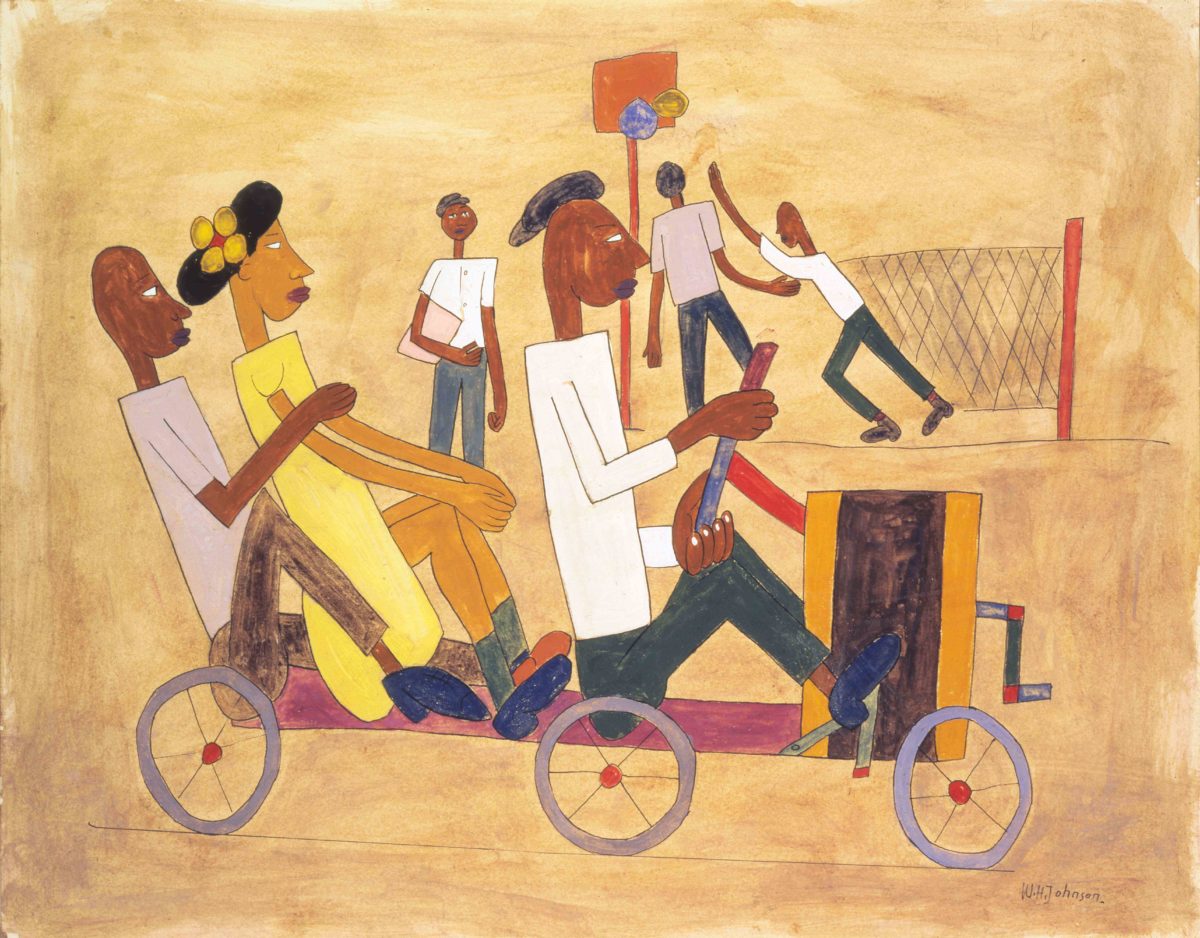
Image of the Week: Soapbox Racing by William H. Johnson

One piece our students have discussed was Soapbox Racing by artist William H. Johnson. It’s full of color, energy, and movement—and perfect for sparking conversation.

Some kids saw a race. Others thought it was a basketball game. Someone noticed a figure in the background stood still. Every observation added a new layer to the story. And with each comment, students learned to see a little more.


Fun Fact: Medical Schools Use VTS Too

Believe it or not, this same method is used in over 30 medical schools, including Harvard, to help future doctors become better at their jobs.

By discussing art, med students learn to:

  • Observe details more carefully

  • Tolerate uncertainty

  • Communicate clearly

  • Practice empathy

The result? Better diagnosis, better care, and a deeper understanding of their patients.

So yes—those three minutes of looking at art? They matter.

Want To Learn More ?

Why We Do It

In a fast-paced world full of distractions, VTS teaches our students to:

  • Slow down

  • Look closely

  • Think deeply

  • Listen openly

It’s a small practice with big impact—not just for art, but for reading, writing, science, relationships... and life.

So next time your child says they “just looked at a picture” in art class, know this:
They were learning how to see the world a little more clearly.


Want to try it at home?

Here is the picture of Soapbox Racing by William H. Johnson. Look at this image with your child. Ask them the three VTS questions. You’ll be amazed what they notice—and how quickly you’ll start seeing more, too.


Friday, October 3, 2025

Lower School Monthly Open Studio: The Month of September

 Lower School Monthly Open Studio: September Theme – Friendship

At the end of every month, our K-5 students dive into a choice-based Open Studio, inspired by the Teaching for Artistic Behavior (TAB) model. This approach transforms the classroom into a creative studio where students take the lead as artists, choosing materials and projects that inspire them.

For September, the theme is Friendship—encouraging students to explore kindness, connection, and collaboration through art.

What’s Happening in September?

Students can choose from a variety of engaging art stations, including:

  • Bracelet Making

  • Drawing on Easels

  • Watercolor Exploration

  • Stencil Art

  • Light Sensory Shape Table

  • Building with Picasso Tiles

  • G3-G5 Independent Drawing Exploration on iPad

This open, choice-based environment nurtures creativity, independence, and community. Students create, express their unique ideas while building a sense of self and belonging. 


4th Grade Direct Contour Drawing on the Mirror with One Eye Closed

4th Grade Direct Contour Drawing on the Mirror — With One Eye Closed! This week in art class, our 4th graders took on a classic observationa...